Skip to content
Motillo

Introduction to MedusaJS - The Modern Open Source E-commerce Platform

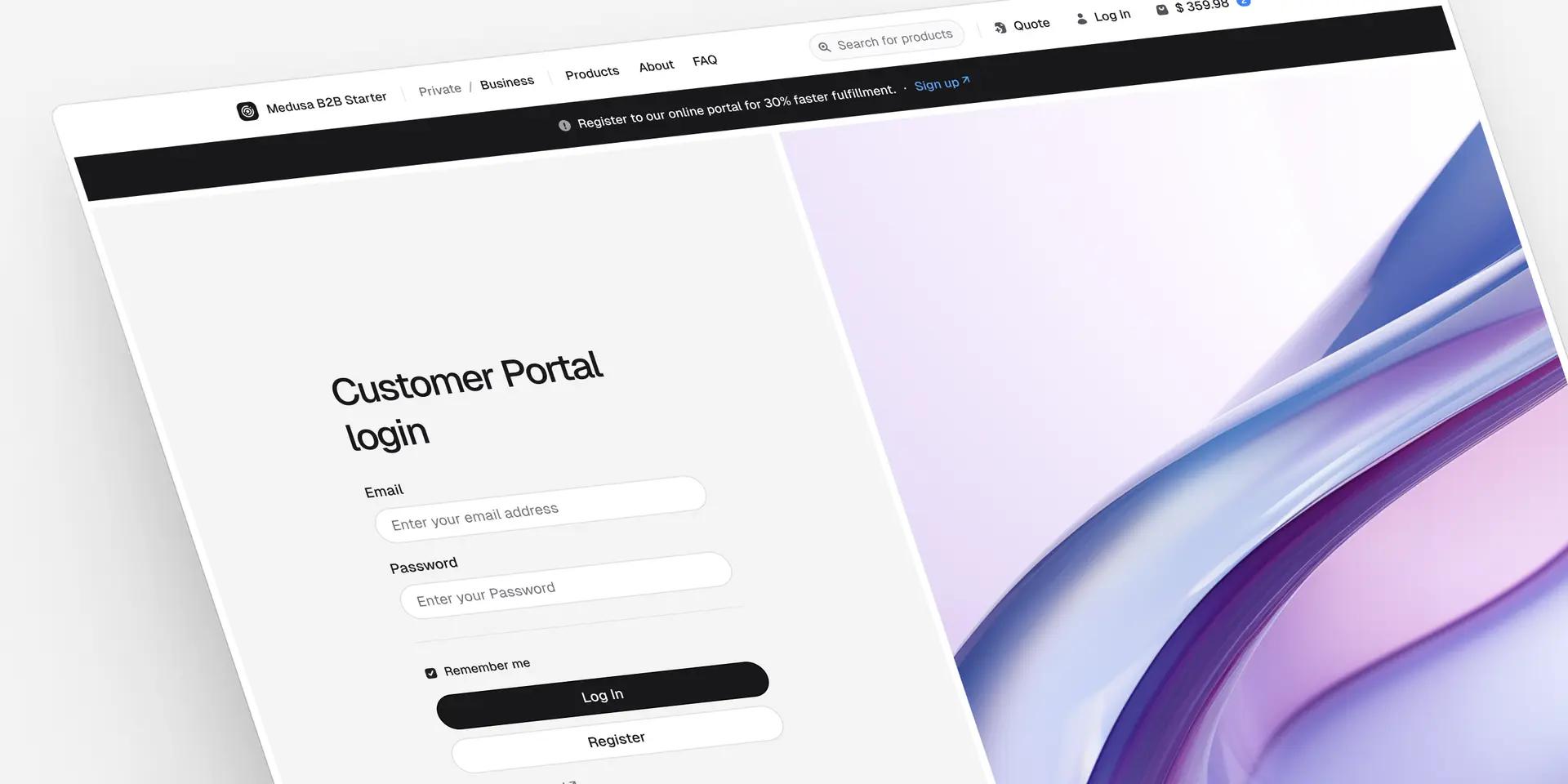
Login page for Medusa Customer Portal

Among the new challengers in e-commerce, MedusaJS stands out as one of the most talked-about alternatives in recent years. The platform has gone from an internal project for a textile brand to one of the most widely used open source solutions for e-commerce, with over twenty thousand stars on GitHub and a growing number of companies building their digital commerce on it. In this article, we walk through what MedusaJS actually is, how it works technically, and why the open source model is such a big part of its appeal.

What is MedusaJS?

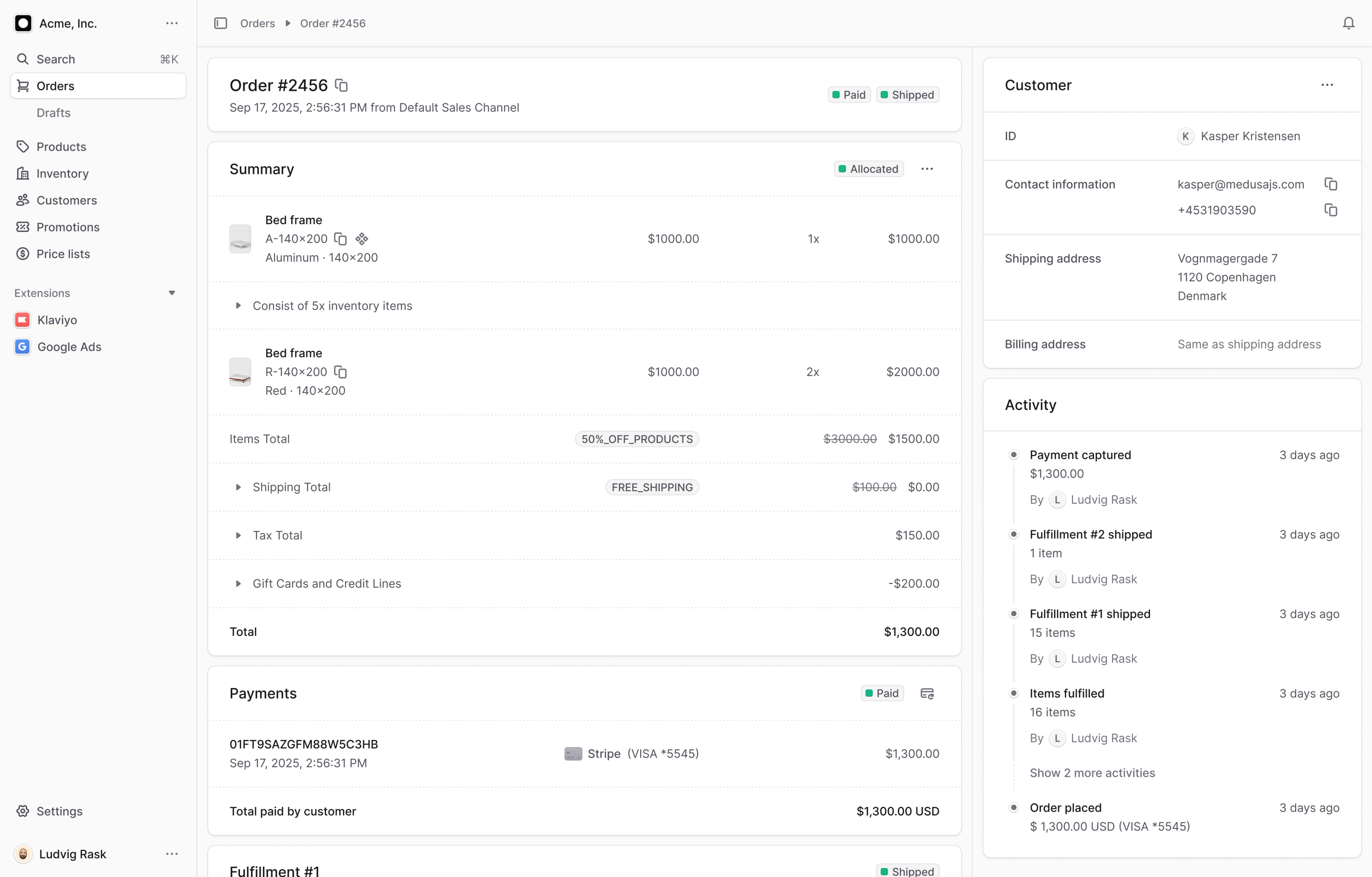
MedusaJS is a headless, open source e-commerce platform built in Node.js and TypeScript. Unlike a traditional all-in-one platform, Medusa completely separates the presentation layer (frontend) from the business logic (backend). The backend handles everything a modern e-commerce operation needs – products, shopping cart, checkout, payments, inventory, and order management – and exposes the functionality via APIs that any frontend can connect to, whether it is a webshop, a mobile app, or another digital interface.

The platform was originally built by founders Sebastian Rindom and Oliver Juhl in connection with a client project for the clothing brand Tekla, which needed a scalable and highly customizable solution. Rather than building everything from scratch – their own CMS, payment solution, logistics engine – they chose to design an architecture built on abstractions, where Medusa provides the core functionality while external services for payments, shipping, and similar can easily be connected. In 2021, the platform was made available as open source, and the response from the developer community came quickly.

How does MedusaJS work technically?

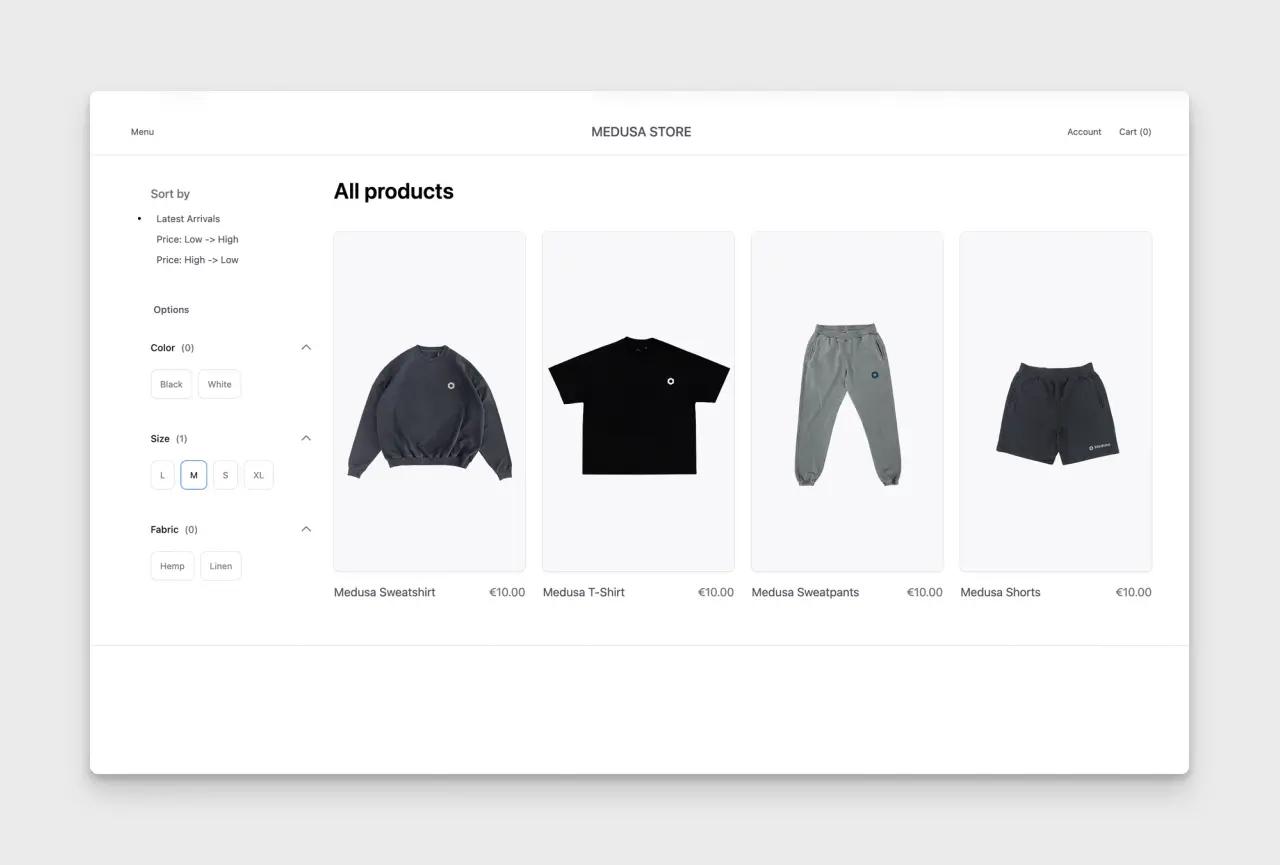
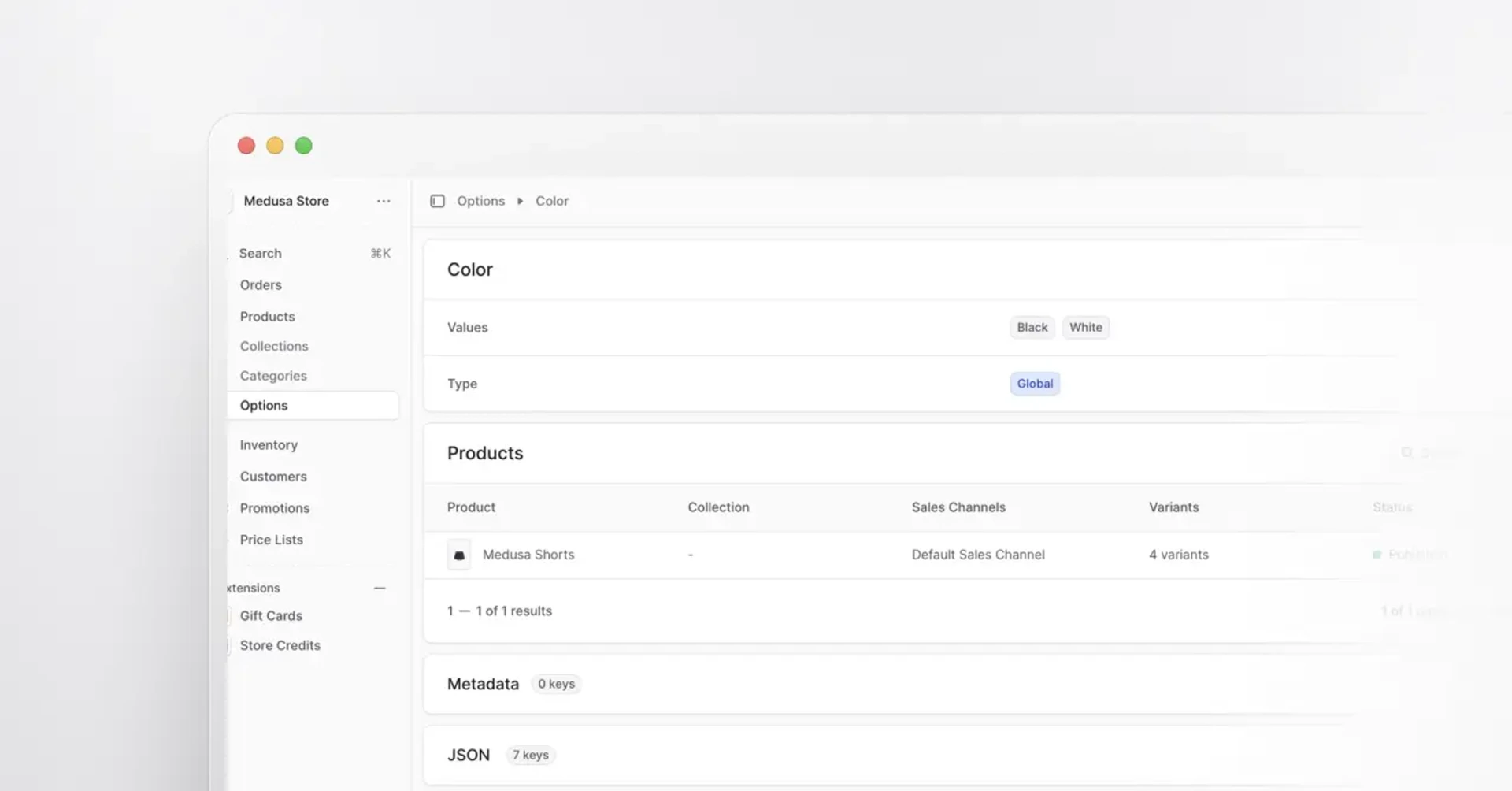
Medusa is built around three main components: a headless backend, an admin panel, and one or more storefronts. Each core commerce function – products, cart, orders, customers, inventory, and payments – is divided into standalone modules with their own clear API surface. This makes it possible to pick the parts you need, plug in custom logic, or scale individual functions independently without risking the rest of the system.

The modular approach differs from traditional monolithic platforms, where all functions are tightly coupled. In Medusa, you can, for example, replace inventory management with a specialized third-party solution without touching the rest of the installation. This is the same principle behind composable commerce: you choose the best possible service for each part of the e-commerce puzzle and connect them via API.

What does it mean that MedusaJS is open source?

An open source platform means that the source code is freely available, that anyone can inspect, modify, and further develop it, and that no single vendor controls how the platform may be used. Medusa is licensed under the MIT license, which means the platform is completely free to use without license fees, transaction fees, or lock-in to a specific vendor.

This model offers several concrete advantages compared to traditional SaaS platforms:

  • No vendor lock-in. Since you own the code and the infrastructure, you can change development partners, move hosting, or rebuild parts of the solution without depending on a single vendor's terms.
  • Full transparency in the code. No black boxes – you can see exactly how every function works, which simplifies debugging, security auditing, and adapting to specific business rules.
  • No license or transaction fees. The cost is limited to infrastructure, operations, and development time rather than a percentage of your revenue.
  • An active community. A large and growing developer community contributes plugins, integrations, and improvements, meaning the platform evolves quickly without being dependent on a single vendor's roadmap.
  • Freedom to scale at your own pace. You can start small with a single store and then grow into multiple markets, brands, or sales channels without platform licensing limiting you.

What features are included in MedusaJS?

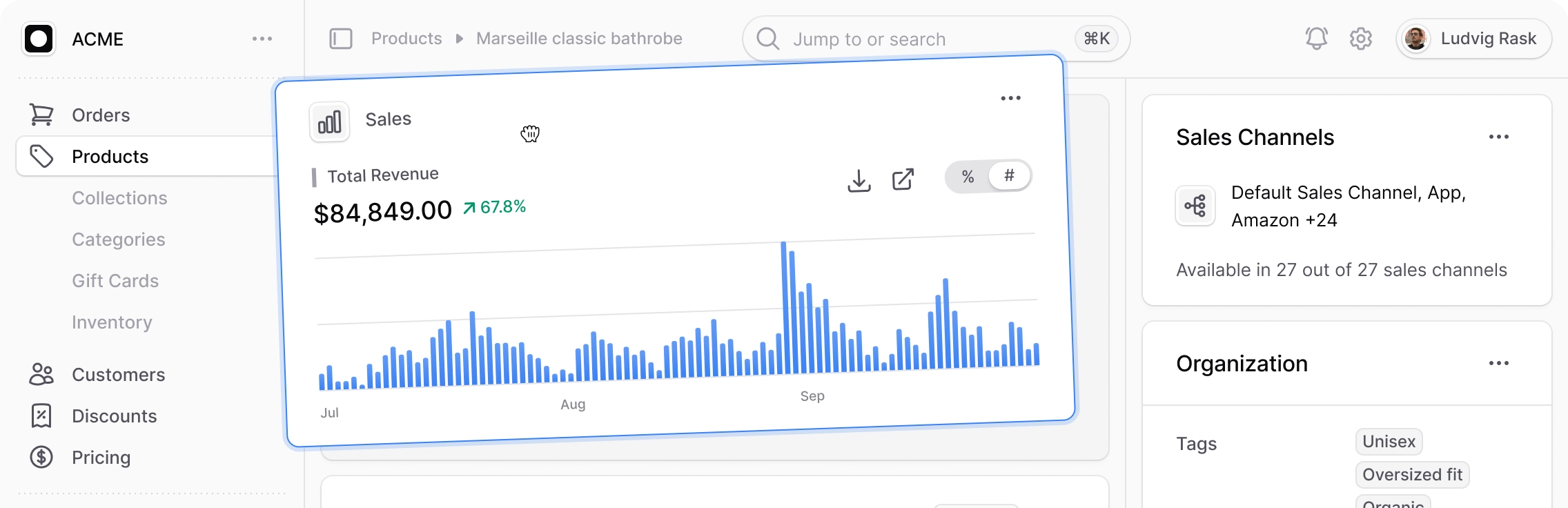
Although Medusa is a developer-centric platform, it includes the same core functionality you would expect from a modern e-commerce solution. This includes rich product pages with support for product bundles and large catalogs via a built-in bulk editor, multiple sales channels for managing multi-store sales, point-of-sale systems, and various apps from the same backend, as well as order reservations and inventory management synchronized across multiple warehouses.

The platform also supports multiple currencies, local tax rules, and market-specific settings for shipping, payment, and discounts, making it well suited for companies selling in multiple countries from a single backend. For B2B needs, there is support for advanced campaign rules, specific customer and company pricing, and free shipping conditions.

When does MedusaJS work as a platform choice?

MedusaJS is particularly well suited for companies that have, or plan to build, an internal or partner-driven development organization and that want full control over their technical platform in the long term. It is a natural choice when requirements for custom checkout logic, multi-market operations, or deep integration with ERP systems and PIMs are specific enough that a ready-made SaaS solution would feel limiting.

Since Medusa is a self-hosted solution rather than a ready-made SaaS service, it requires your own expertise, or a development partner, for operations, security, and ongoing maintenance. This is a trade-off worth making consciously: open source gives freedom and cost control, but also shifts the responsibility for infrastructure from a platform vendor to you or your technical partner.

AI support in MedusaJS

MedusaJS has actively positioned itself around AI, both as a tool for building the platform faster and as a way to embed intelligent features in the store itself. This is an area that clearly distinguishes it from more traditional e-commerce platforms, where AI support at best is layered on top of existing architecture rather than being integrated from the ground up.

On the development side, Medusa provides a number of tools to let AI agents build and maintain the solution. There is a dedicated Agent Skills collection that gives coding agents like Claude Code specific knowledge of Medusa's patterns and architecture, making it possible to add new features, debug issues, and customize the admin panel via natural language instructions without having to write every line of code manually. An MCP server (Model Context Protocol) also allows AI agents to fetch information directly from Medusa's documentation during ongoing coding, reducing the risk of incorrect implementations. In Medusa Cloud, since June 2026, there is a built-in AI assistant that automatically analyzes and resolves failed builds and deployments, with plans to eventually handle code changes via natural language commands directly from the dashboard.

Medusa's open API architecture also makes it easy to integrate AI-powered features into the actual customer experience. Since there are no platform limitations on what can be connected, companies building on Medusa can without much friction add semantic product search via Algolia or MeiliSearch, recommendation engines that use order history and behavioral data to surface relevant products, or dynamic pricing based on customer data and demand patterns. Medusa now describes itself as a platform built for agents and developers, signaling that AI integrations are a central part of the platform's direction going forward rather than a side track.

MedusaJS compared to other platforms

It can be easier to understand MedusaJS by contrasting it with the two other main categories of e-commerce platforms. Traditional monolithic platforms, such as older versions of Magento, package frontend and backend in the same system. This provides a fast start but makes it difficult to replace or update individual parts without affecting the whole. Managed SaaS platforms like Shopify remove much of the operational burden but at the same time limit how deeply you can customize core flows like checkout and product models.

MedusaJS represents a third path: a self-hosted, modular backend that combines the ready-made core functionality of SaaS platforms with the full customizability that otherwise requires a platform built entirely from scratch. This makes Medusa part of the broader trend toward composable commerce, where companies deliberately choose the best possible service for each part of their technology stack instead of locking the entire business into a single vendor's ecosystem.

Practical examples of use cases

In practice, MedusaJS is used in several different types of scenarios. A common example is companies selling in multiple countries from a single backend, where a single Medusa installation handles the product catalog and order logic while separate, localized storefronts are shown to customers in different markets with the right language, currency, and payment methods. Another example is brands wanting to run multiple sales channels in parallel – webshop, mobile app, and physical store via point-of-sale – from the same central product and order data, without duplicating information between systems.

Medusa is also used by companies migrating away from a SaaS platform when transaction fees or limitations in checkout customization start becoming a significant cost or a concrete obstacle to growth. Since the platform is built modularly, it is possible to migrate feature by feature rather than doing a complete migration at once, which lowers the risk in such a project.

The community and the importance of the ecosystem

A decisive factor for how quickly an open source platform develops is the size and activity of the community around it. MedusaJS has in a short time built up a significant developer community with thousands of active members in its discussion forums, which has contributed to a steady stream of plugins, integrations, and improvement suggestions that go beyond what the core team develops themselves. This is an important difference compared to smaller open projects, where the pace of development is often entirely dependent on a small group of maintainers.

An active community also means that problems and bugs are often discovered and fixed quickly, that there is plenty of documentation and examples to lean on during implementation, and that it is easier to find developers with relevant experience since the platform is built on commonly used technologies like Node.js and TypeScript. This lowers the threshold for building and maintaining a solution compared to platforms based on more niche technology stacks.

Potential challenges to consider

The freedom in MedusaJS comes with a responsibility worth being aware of before choosing the platform. Since Medusa is not a complete SaaS service, it requires your own expertise, or a reliable development partner, to handle infrastructure, security updates, scaling, and monitoring – tasks that a SaaS platform otherwise handles for you. Integrations with payment providers, shipping companies, marketing tools, and similar services also need to be built or configured specifically for your installation, rather than installed as a ready-made app.

It is also worth planning for the longer lead time that often follows from building a solution from scratch, compared to getting started with a SaaS solution like Shopify. A common and effective strategy is to prioritize integration planning early in the project rather than treating it as a final puzzle piece, since it is precisely the integrations with payment, shipping, and other services that typically take the most time to get in place in a customized commerce architecture.

Summary

MedusaJS represents a clear trend in e-commerce: companies want more control over their technical platform, faster development cycles, and the ability to deliver a consistent customer experience across multiple channels, without paying for features they do not need or being locked into a single vendor's ecosystem. With its open source model, modular architecture, and growing feature set, Medusa is one of the most interesting options for companies wanting to build a tailored, future-proof e-commerce solution.

Frequently asked questions about MedusaJS

  • Yes, the platform is licensed under the MIT license and is free to use without license or transaction fees. The actual cost instead lies in operations and development time.

  • Developers need to be involved in some form, either through an external development partner or in-house staff. By choosing an external partner with experience in Medusa, you do not need to worry about the technical questions yourself.

  • Yes, the platform supports customer-specific pricing, advanced campaign rules, and other features relevant for B2B commerce, although the depth of B2B functionality often needs to be supplemented with custom development depending on the business's specific requirements.

  • There are relatively many ready-made connectors for payment solutions, CMS, and email marketing platforms. A selection of ready-made connectors includes Stripe, Paypal, Klaviyo, Mailchimp, Storyblok, Sanity, and Contentful.

    Beyond this, the support for building your own connectors is well-documented.

  • Medusa offers a managed cloud service, Medusa Cloud, with the tiers Hobby (free for experiments) and Pro (production environment with auto-scaling, automatic backups, and zero downtime). For companies wanting to manage their own infrastructure, Medusa works on all major cloud providers such as AWS, GCP, and Azure. Medusa Cloud charges no GMV fee regardless of plan, which is an advantage compared to SaaS platforms that take a percentage of revenue.

  • Medusa provides a ready-made Next.js starter that covers standard e-commerce flows and serves as a starting point for most projects. The platform's API-first architecture makes it technically possible to use any framework – React, Vue, Nuxt, or even a mobile app – but Next.js is the most common choice and has the best support in the community and documentation.

  • Medusa has built-in support for multiple currencies, local tax rules, and market-specific settings for shipping, payment, and discounts. This makes it possible to run sales in multiple countries from a single backend instance, with separate storefronts or localized views per market.

  • MedusaJS is one of the fastest-growing open source projects in e-commerce, with over 30,000 stars on GitHub and an active discussion community. The platform has venture capital backing of more than ten million dollars and a dedicated core team, which provides a more stable development pace than purely community-driven projects. Releases happen regularly with new functionality, improved modules, and extended integrations.

Want to know more about Medusa?

Motillo helps Nordic B2B and B2C companies get started with, or further develop, their e-commerce solution. We are happy to help you evaluate whether MedusaJS is the right platform for you.

Want to know more about Medusa?

Your digital growth partner

We ensure strategy becomes reality, combining technology with marketing so you grow faster.

Got any questions?

Get in touch and we'll talk about your growth journey

Simon Andersson

Simon Andersson

Försäljning & rådgivning