PaaS vs SaaSArchitecture: integrated platform vs. pure headless engine
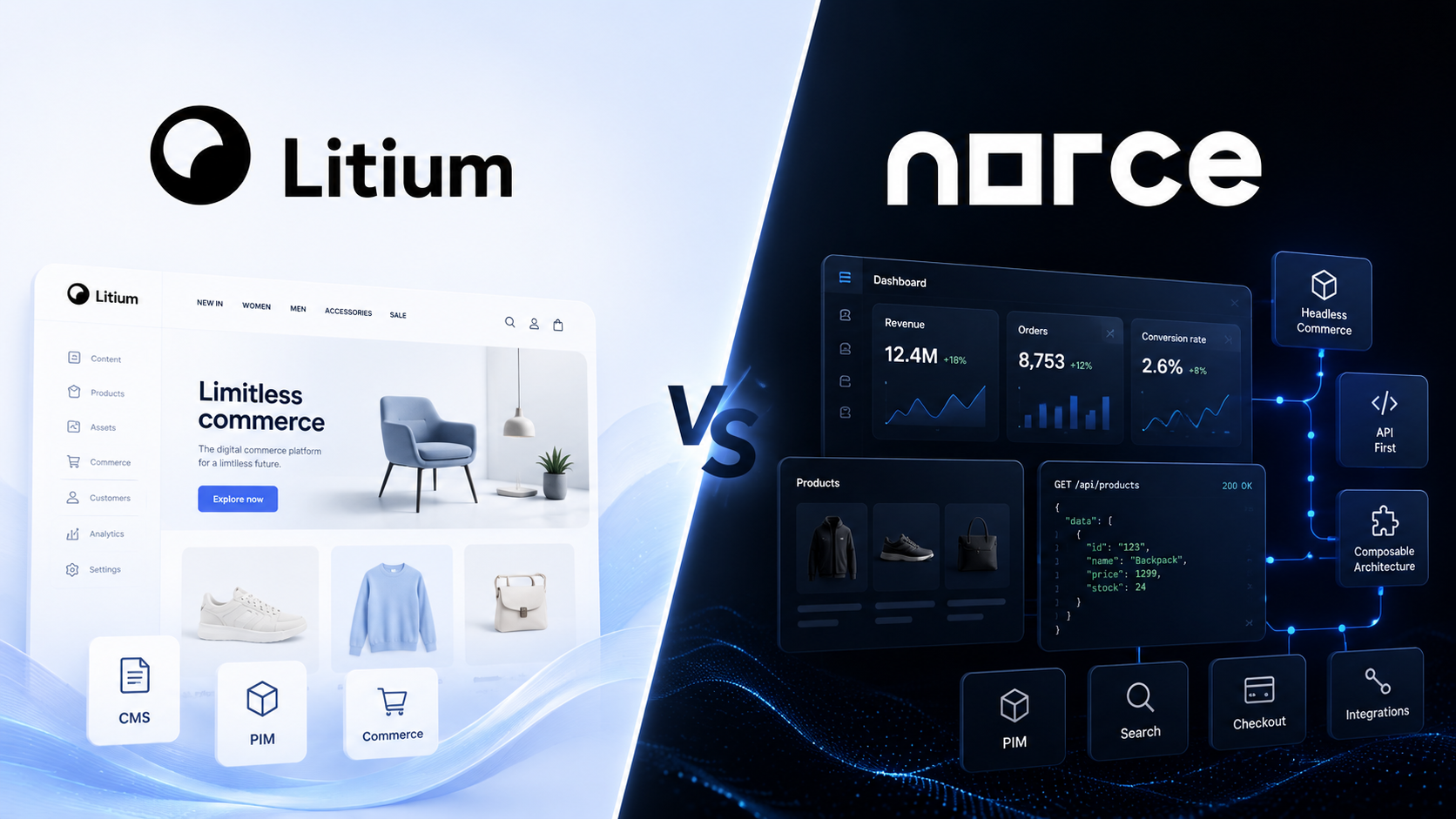
The most fundamental difference between the platforms concerns architecture. Litium offers a model where you can choose to run an integrated solution with CMS, PIM, and e-commerce in the same system for fast time-to-market. For those who want it, there's also the option to use an external CMS or PIM instead of Litium's built-in ones. That makes Litium a natural choice for companies that want a cohesive platform but still want to keep the option of decoupling parts later on.
Litium is delivered as a so-called "PaaS" — product-as-a-service. This means the product is delivered via Litium's cloud operation, but each customer has their own solution and doesn't share a codebase with others. This means, for example, that version updates are carried out by the partner responsible for the solution.
Norce, by contrast, is purely headless from the ground up. There's no built-in CMS or ready-made frontend to fall back on — instead, Norce is often combined with a separate frontend solution or a CMS like Umbraco. This model offers maximum freedom to choose the components that best suit the customer, but generally requires a more substantial initial investment since more parts need to be assembled and maintained.
Since Norce is a so-called "multi-tenant SaaS," version updates happen automatically, without partner involvement. All customers using Norce will therefore always be on the latest version as soon as it's released.